
I have a confession to make. I’m into papers (probably a bit too much).
Papers?
Conference papers, reports, academic journal articles that sort of thing. I’m not alone in my fondness for papers. You’ve likely heard of PapersWeLove which is a repository of academic computer science papers and a community who loves reading them.
Yes, people get together and nerd out about their favourite papers. To get an idea, here’s one of my favourite papers, Common Ground and Coordination in Joint Activity, presented by John Allspaw at PWL event:
John is the one that got me interested in papers the first place. Specifically papers around safety, human factors and resilience engineering. My favourite source for such papers is http://resiliencepapers.club/ created by Lorin Hochstein.
After getting used to the writing style, I now read a few papers a week in a good week. I get a lot out of learning new (and very old) things and enjoy thinking about how I could apply some of the ideas at work. It helps me to be a better engineer. I also organise irregular internal Papers-We-Love discussions. The last one was about The seductions of clarity by C. Thi Nguyen (great paper, recommended by Yvonne Lam).
My Problem
Reading papers is educational and all but I’m still reading by myself. I have no idea if what I’m taking away is totally missing what is relevant. Nobody is challenging my conclusion or building on them. I can only make connections that I can come up with myself. It’s also a bit lonely. Yes, synchronous Papers-We-Love discussions are fun, but they take time to organise and prepare and you can only do so many. I needed something additional that would work asynchronously and scale and make reading papers more social.
The Solution
Many people don’t know this, but Google Drive lets you upload pdfs and here’s the secret: you can allow people to comment in the pdfs like they would in a google doc.

It’s simple but you can do a lot with this. Here are a few examples how I use it with papers:
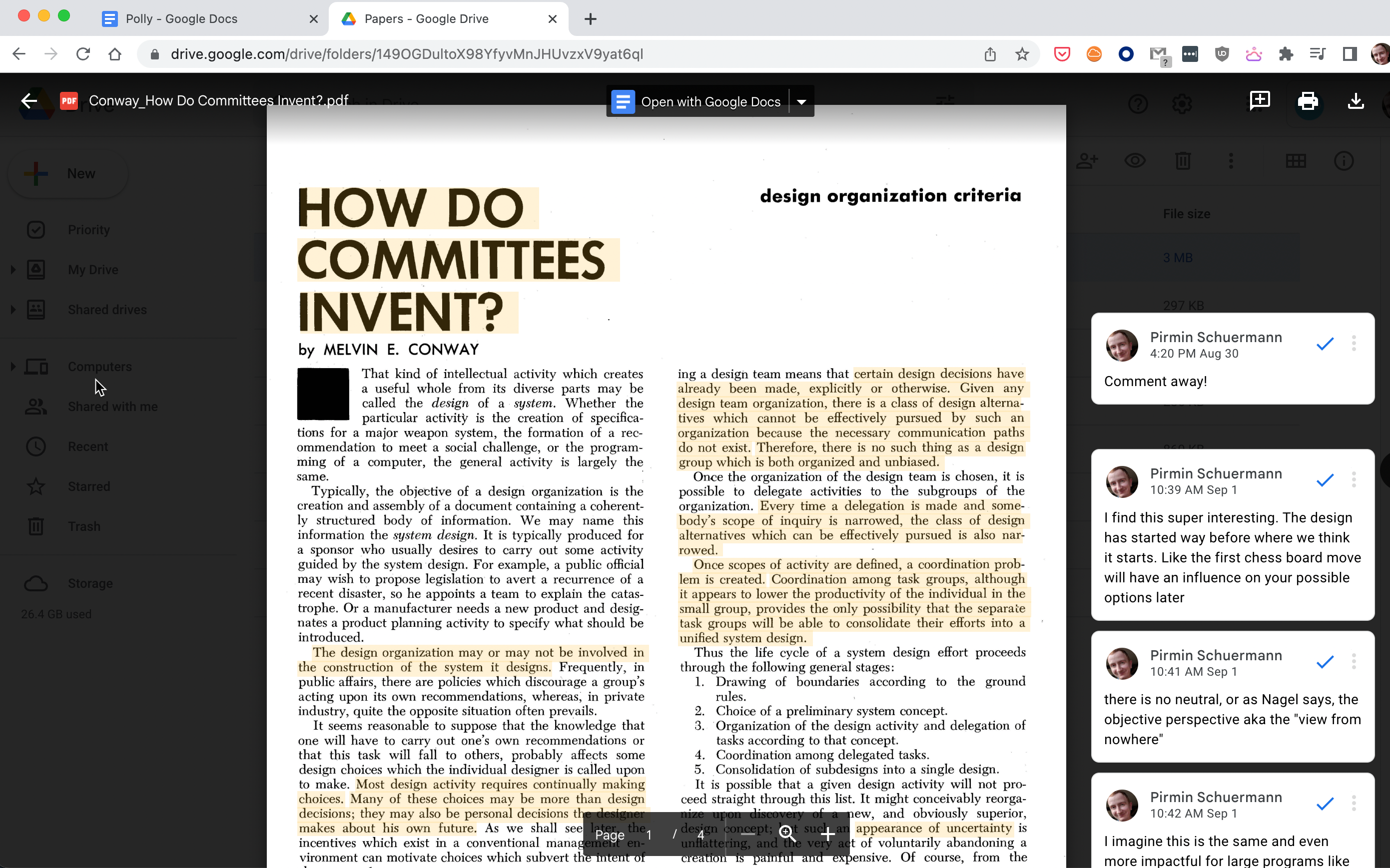
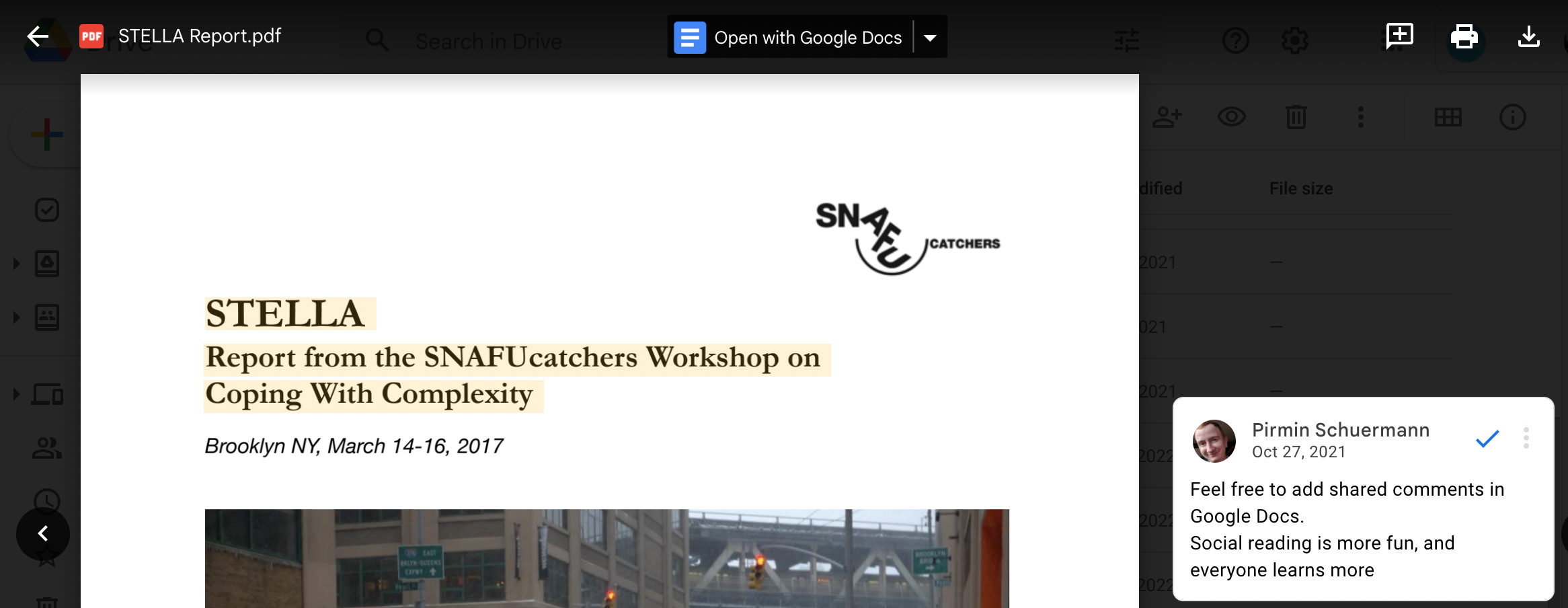
Because it’s such a hidden feature, I always leave a comment at the top to show folks how it works:
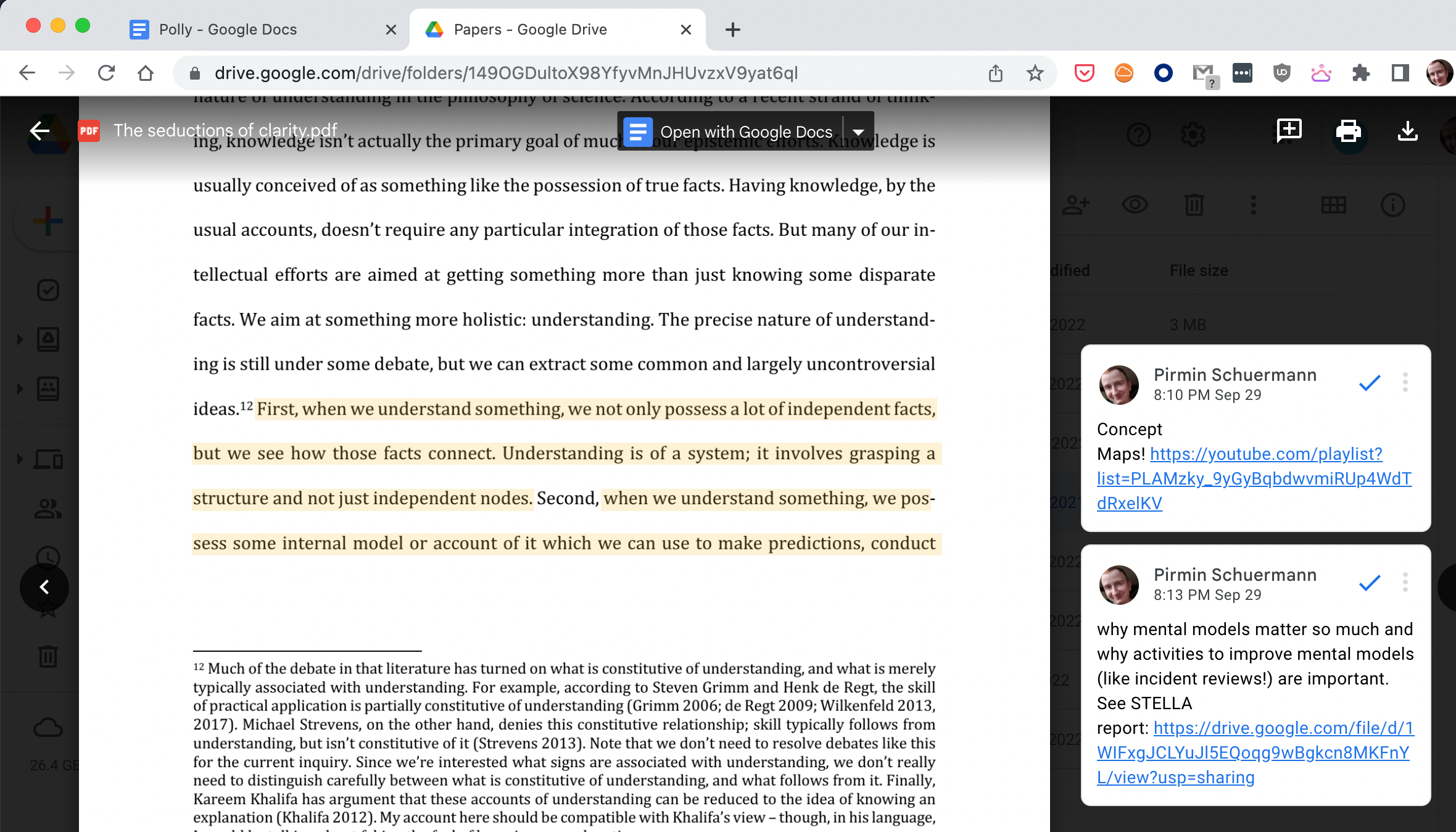
You can link other useful resources and link between papers:
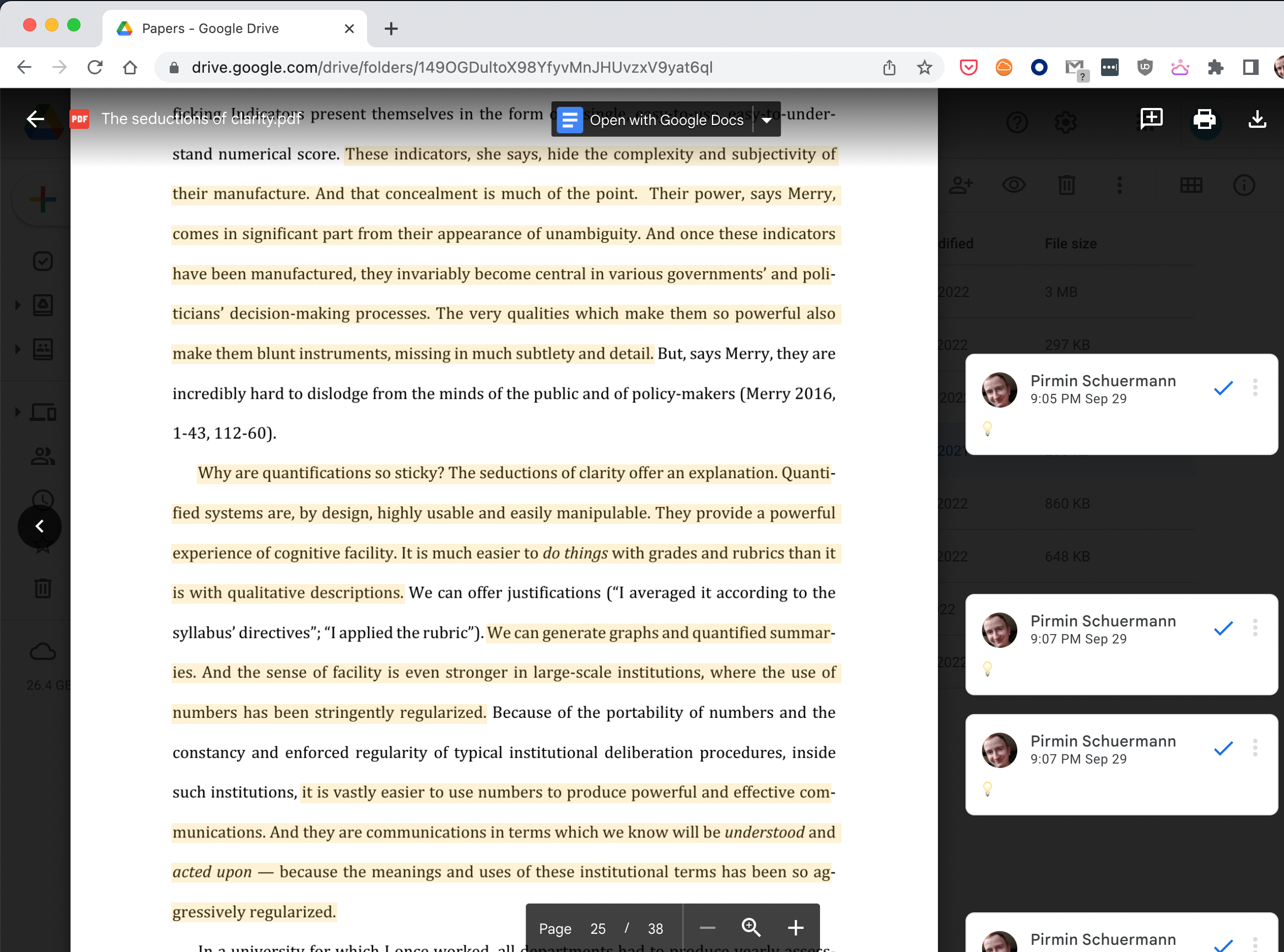
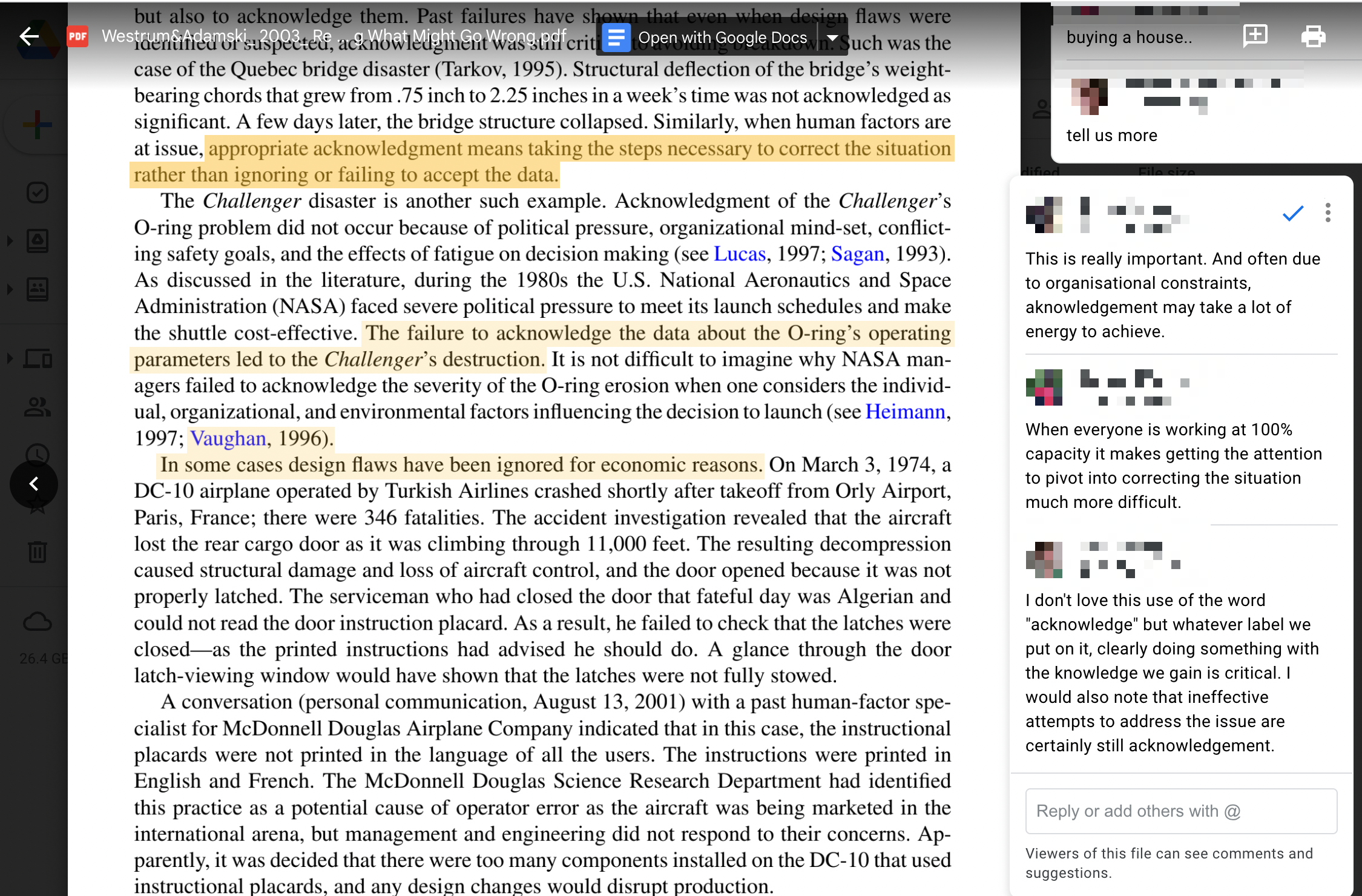
If I want to highlight something without any comment, I simply use emojis. I can always go back and edit my comment or add to the thread:
What I love most is being able to discuss with others. Even years later, people that stumble upon the annotated papers will be able to get something out of the highlights and comments.
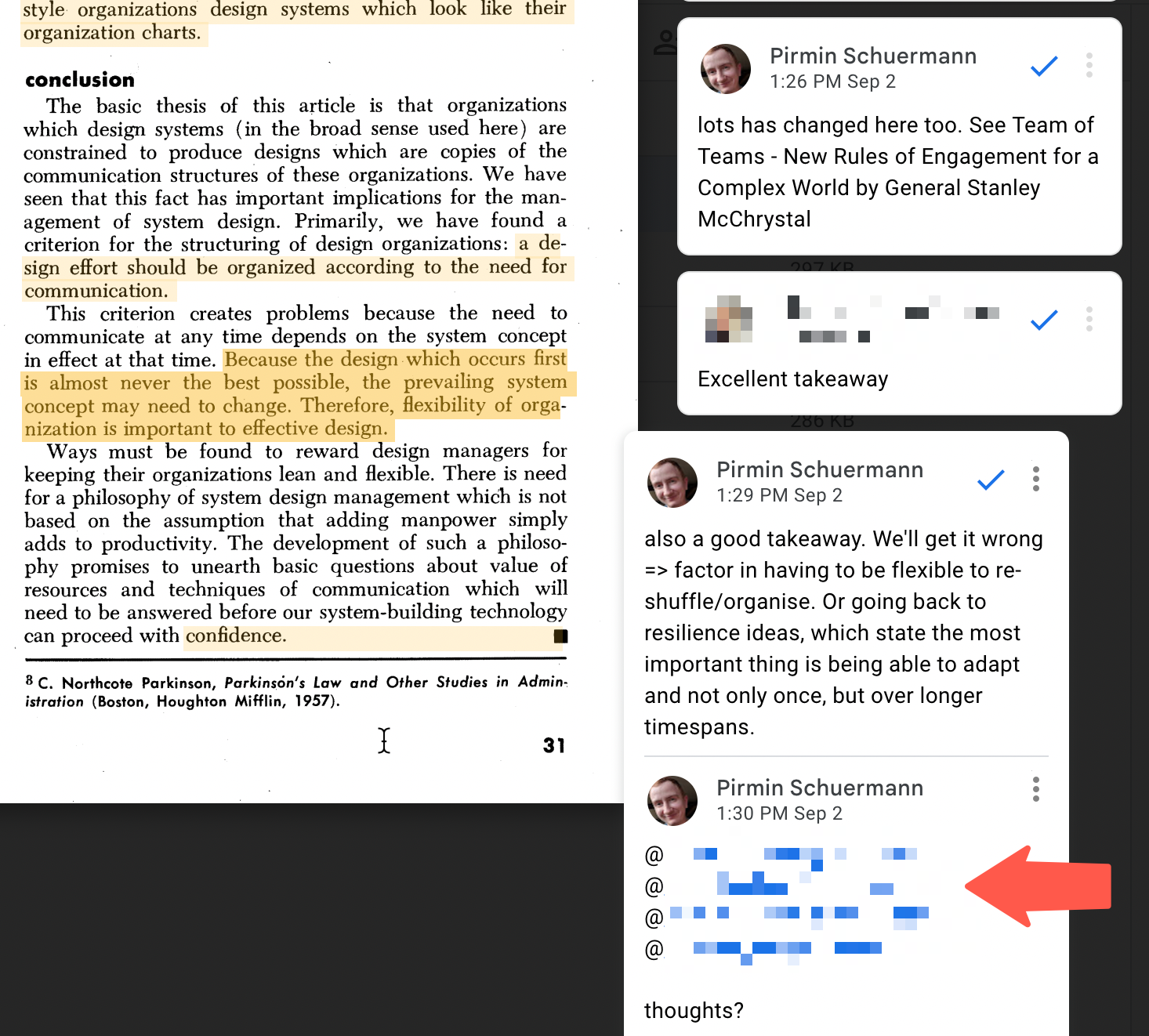
You can also tag people to drag them into the conversation or to simply share quotes:
Try it out and let me know what you think.
Bonus – the not so obvious reasons
I want to help create a learning organisation but the challenge with encouraging learning is that so much of it is invisible. Can you create traces of learning? How do you show folks that learning is something others do too? How can you role model asking questions or challenging each other (across layers of hierarchy even)? I do believe this way of social reading can help. Some examples:
- there is visible evidence of engagement via highlights and comments (social proof). Showing what other people are doing is a powerful nudge. Imagine you open a doc and you see a few familiar or influential faces commented already. Are you not inclined to have a read too and to engage?
- showing vulnerability by asking questions => creating psychological safety. Depending on your role this can be very powerful. Yes, we expect everyone to ask questions but hearing it from more senior people has a big impact. Imagine you open a doc and you see your head of engineering is asking some great questions. Are you not inclined to ask more questions too?
Happy paper reading!
 Pirmin's blog