
After watching a presentation by Dr. David D. Woods a few weeks ago, I’m thinking about reliability vs robustness vs resilience a lot more. On a recent road trip I couldn’t help but look at the road safety features in a new way.
Inspired by that road trip, I’ll try to translate some of the Resilience Engineering (RE) and Safety concepts and language into something we all know. In this first part I’ll cover the competence envelope, robustness and how it contributes to complexity.
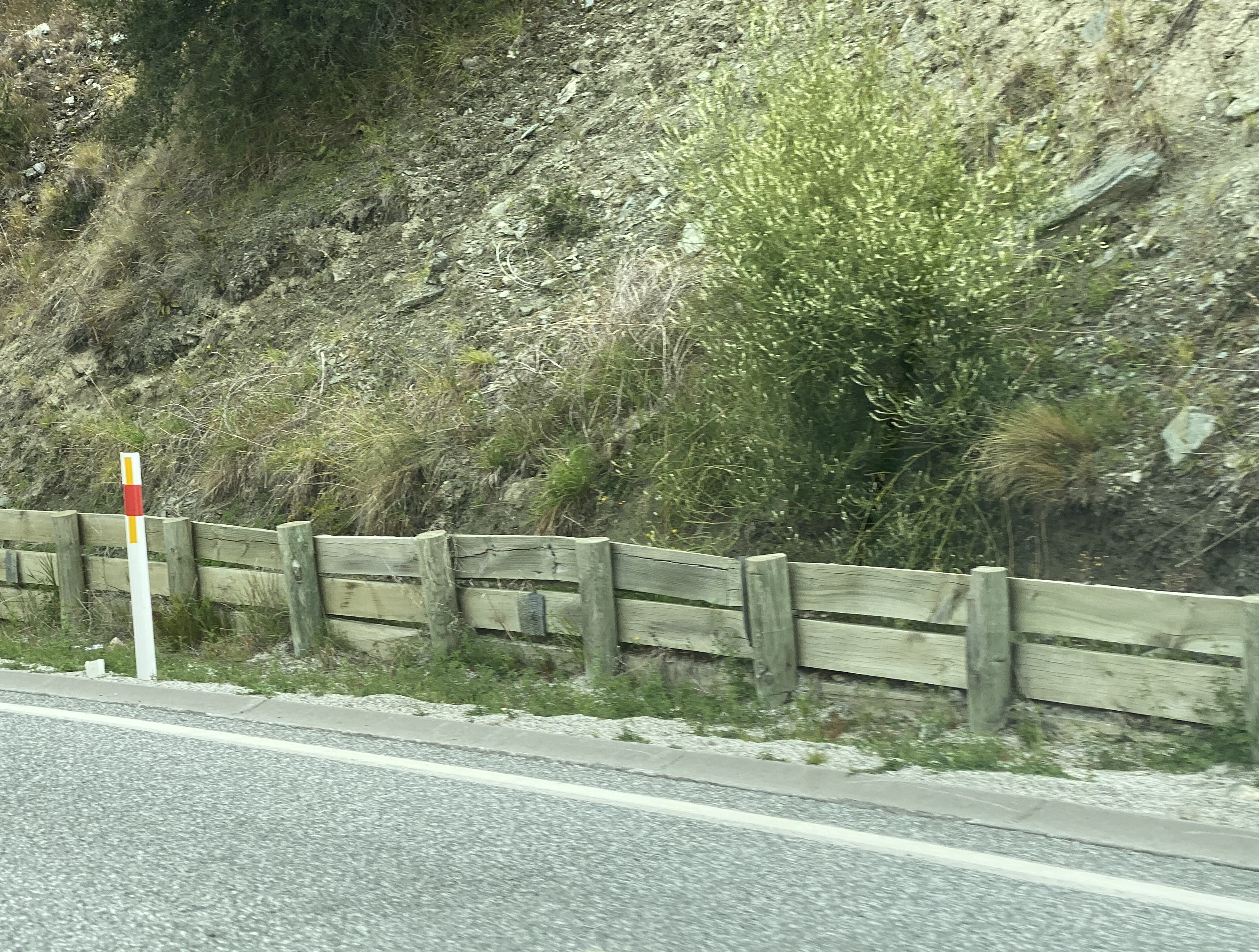
Let’s consider what we can see in this picture as a the technical aspects of a system that consists of:
- a paved road
- gravel
- lane marking
- reflective pole
- ditch
- rock wall thingy
- my car
Many of these elements are robustness features that extend the competence envelope of the system. The competence envelope defines a space or set of parameters in which our system performs as expected. Far from the boundary of the envelope, the system behaves as expected. If conditions arise that get us close to the edge of the competence envelope (or outside the envelope) and when there’s no resilience (aka capacity to adapt), then we’re in trouble. Close to the edge of the envelope and without resilience, the system is not competent to handle the challenges.
In Resilience Engineering speak, the system will be brittle or fragile and has a high risk of collapse when events bring us to the edge of the competence envelope (Woods sometimes refers to that as the boundary).
Q: Why use fancy Resilience Engineering (RE) language like competence envelope? Shouldn’t you stay away from jargon?

A: You’re right, it’s not needed to explain the concept, but you will find it in the literature in many places. When I began learning about resilience, the whole envelope thing was very confusing for me. Maybe that was because English isn’t my first language. I’m hoping that including the jargon will make it easier for others when they fall down the Resilience Engineering and Learning From Incidents rabbit hole.
Thanks to these robustness features, the road system can deal with a wider range of well-modelled and well-understood challenges. With fewer features e.g. if we were to remove that rock shield, the system wouldn’t be competent in handling a football sized rock.
| Robustness feature | Protects against |
|---|---|
| seal | rain, weather, sliding (better traction), damage from heavy trucks and chains |
| gravel | snow and ice, aqua-planning, less use of chains to reduce road damage |
| lane marking | staying on the road, enables features like lane-assist, unsafe overtaking by marking where cars can pass safely |
| reflective pole | darkness, fog, heavy rain, lack of visibility, limited angle of headlights, lack of adaptive headlights, keeping on the lane when it’s covered by snow |
| ditch | flooding of the road, washout |
| rock wall | small-medium rocks, small slips, snow |
| car | bugs, birds, small rocks, gravel, other cars, weather |
Robustness features extend the competence envelope of the road system. But there are caveats: Robustness doesn’t come for free. It costs money and all these robustness features increase complexity.
Another caveat is that robustness features are only additive to a point and then they start interacting and can produce Robust-Yet-Fragile (RYF) behaviour. More on that in a future blog post.
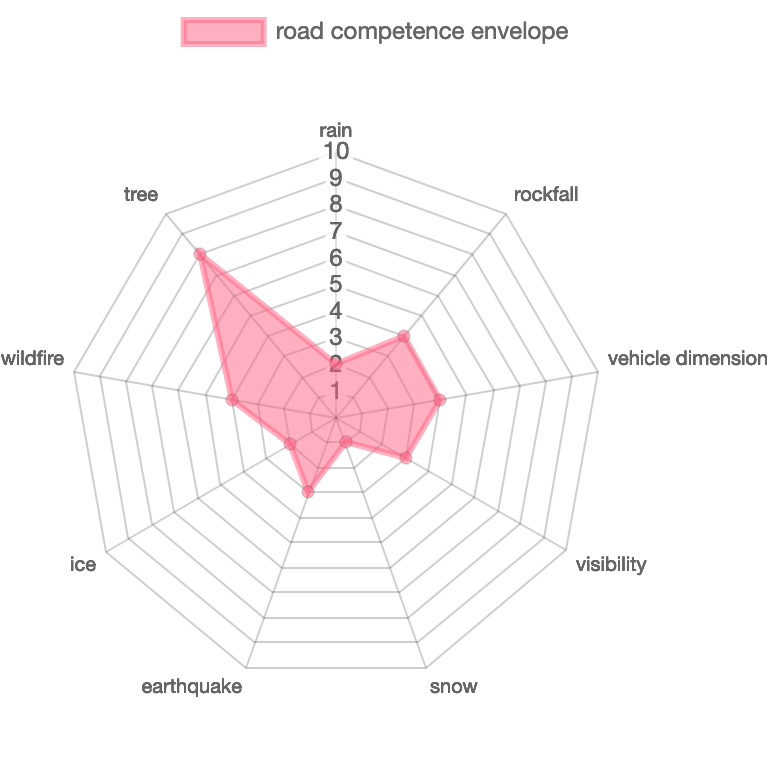
A crude way to visualise the competence envelope of two roads with different robustness features is a radar graph. Bigger competence envelope => the system can deal with more things competently.
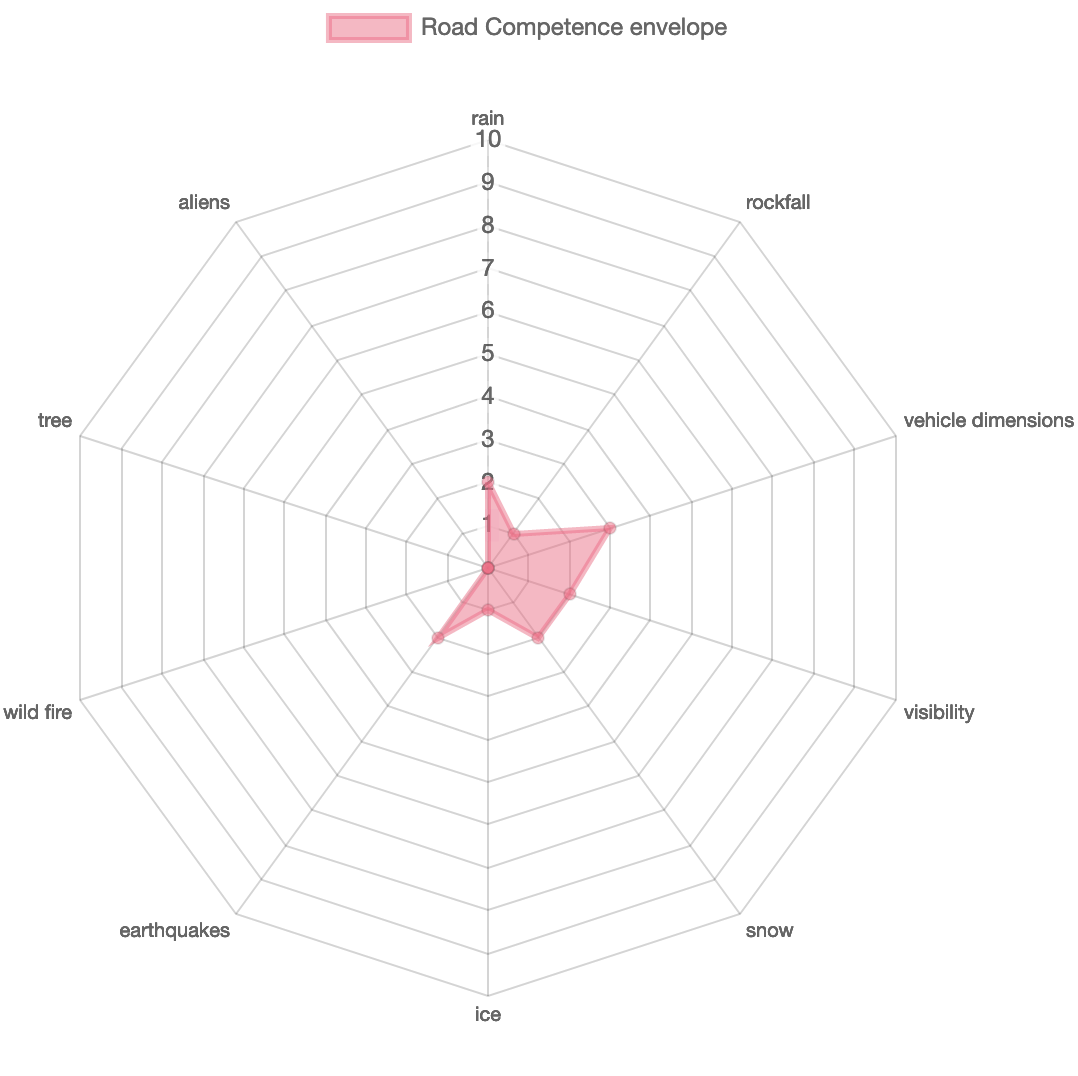
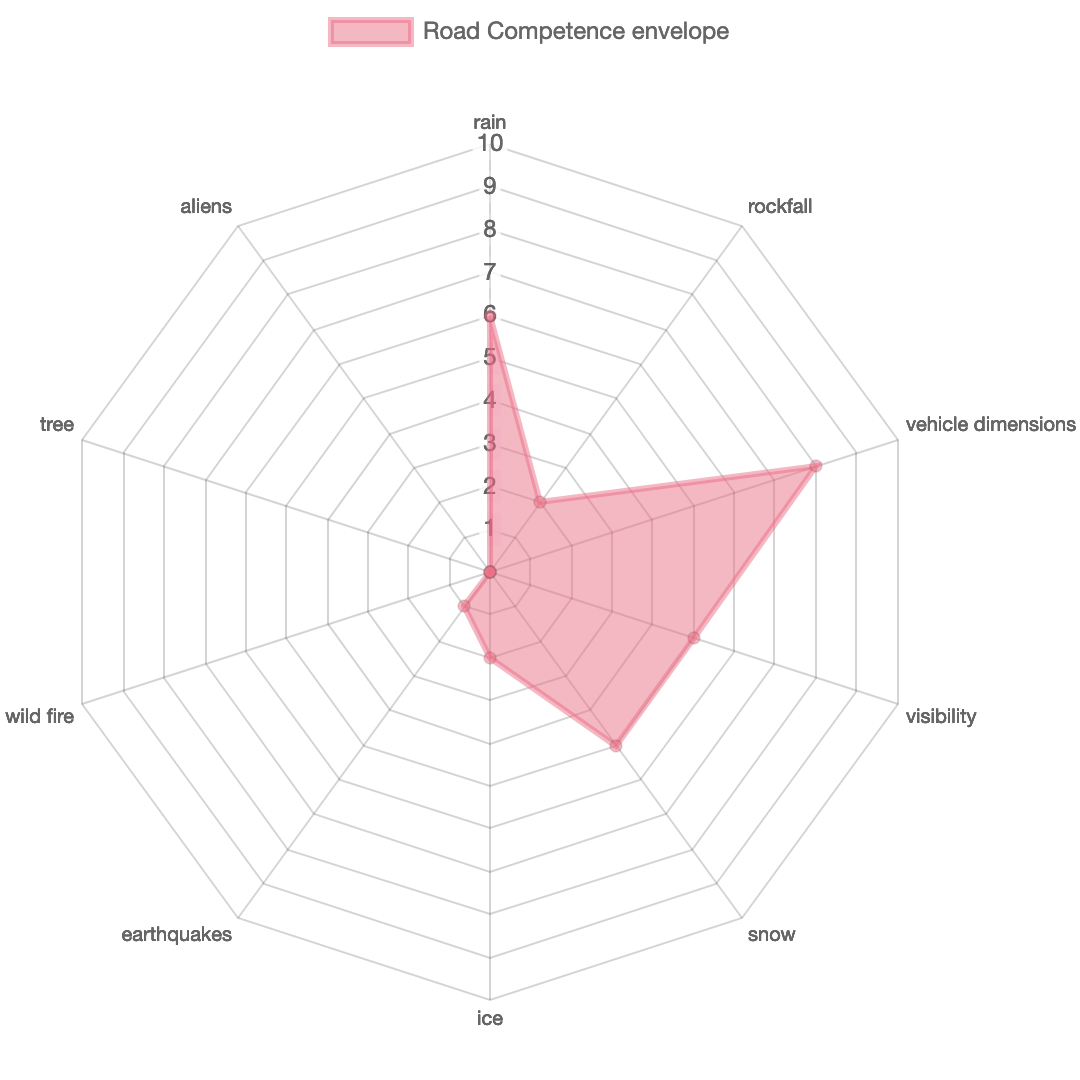
A few road examples with different robustness
Road A
no features, no seal, no marking, no safety=> 0 complexity

CC BY 3.0, via Wikimedia Commons
Road B
features: gravel
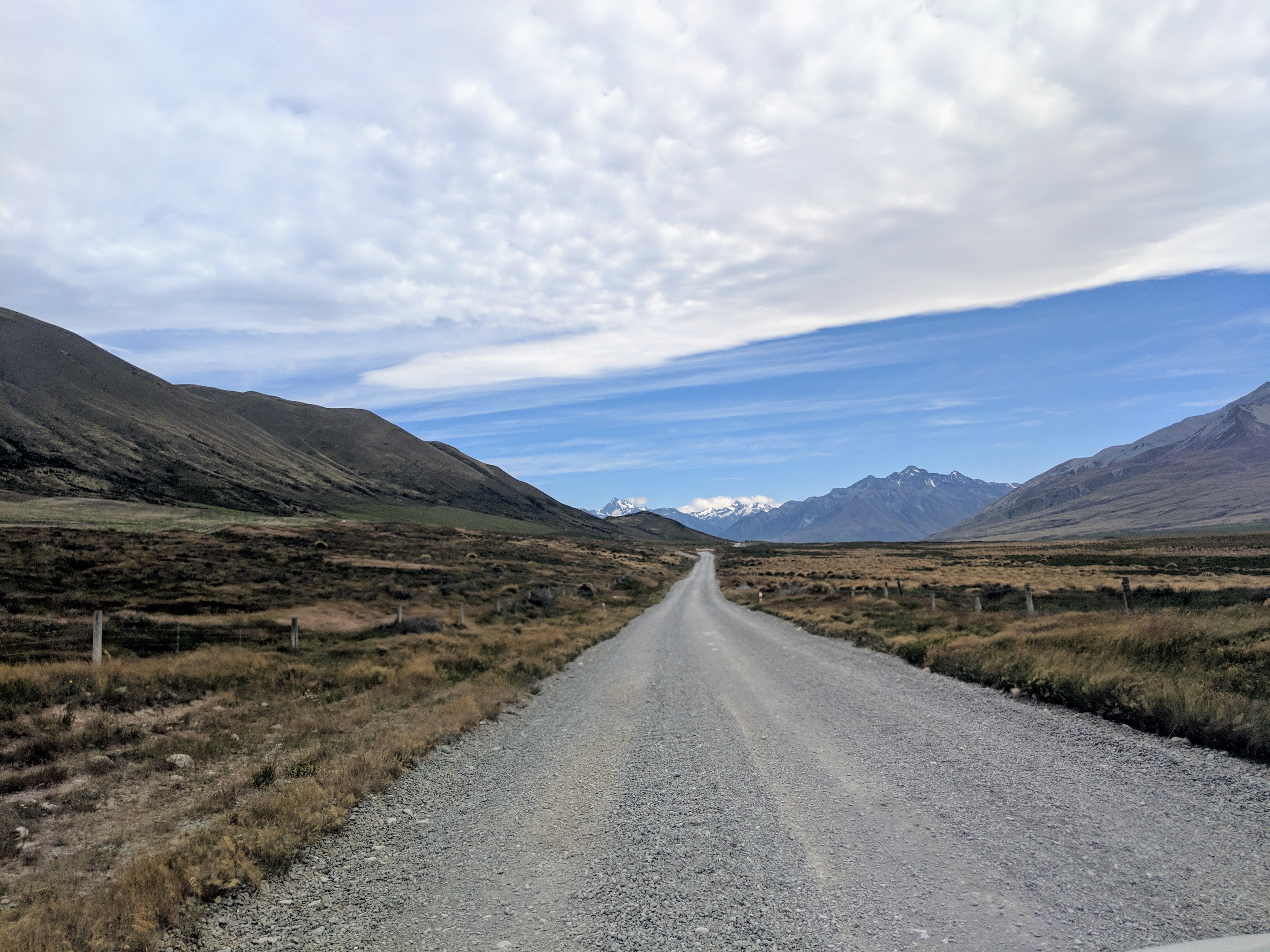
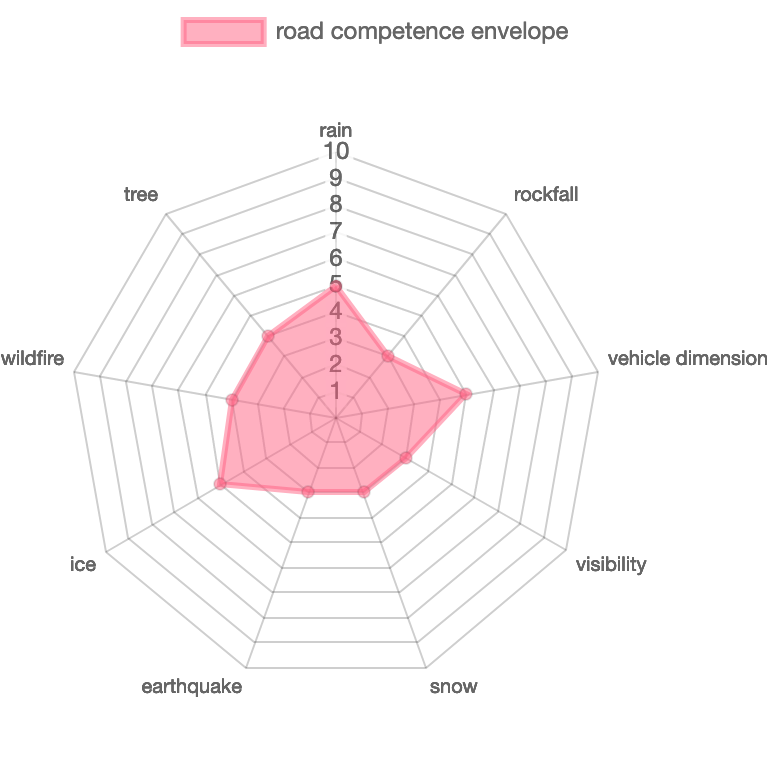
Road C
features: gravel, ditch + reflective poles, fence (can handle cattle, but not rabbits or elephants)

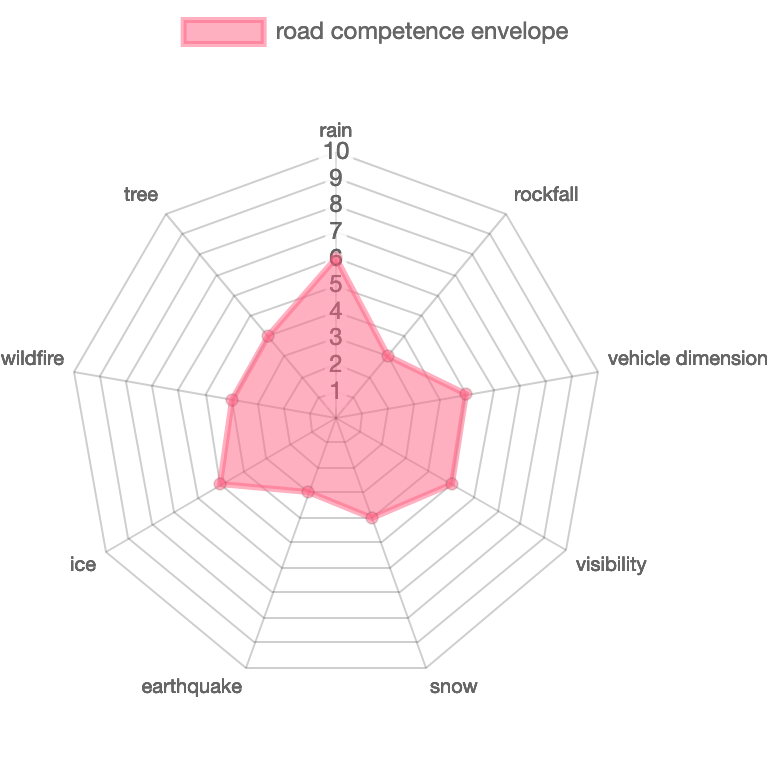
Road D
features: multiple lanes, dividing wall, barriers

via Wikimedia Commons
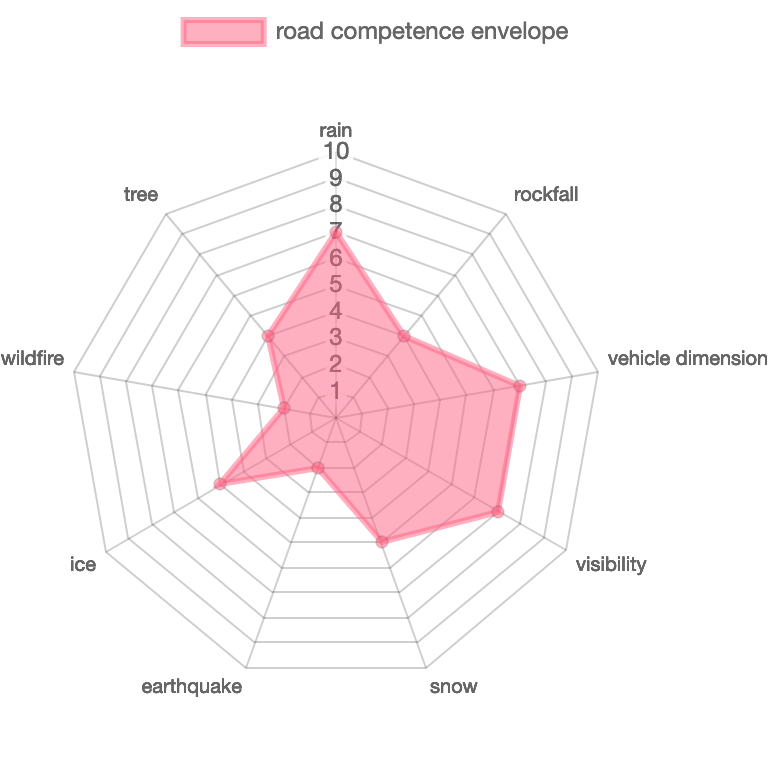
Discussion
The Resilience Engineering literature teaches us that any system has a range of inputs that it can handle. Every system has a competence envelope.
The road system depicted is competent against a limited set of well-understood events. e.g. cars of a certain size and weight, a certain volume of traffic, certain weather events, rocks to a certain size, slips to a certain volume. The robustness features make the road competent to work with a limited range of inputs.
Why does it matter?
The competence envelope model tells us that our systems are only robust to handle certain events. The model helps us think and talk about how to make our systems more robust against well-known or well-modelled hazards. It will help us to consider the complexity increase that comes with more robustness. At some point the complexity penalty is too high. If we make a system too robust, we can end up with a Robust-Yet-Fragile system where complexity that results from increased robustness creates new sources of fragility. More about that and why we also need resilience in addition to robustness in future blog posts.
TL;DR
Competence Envelopes are a space or set of parameters in which a system performs as expected. For example New Zealand roads are designed for vehicles which have a 6000kg maximum load on a single axle.
If events happen that bring us to the edge or outside of the competence envelope, and when there’s no resilience (capacity to adapt), then we’re in trouble. Examples would be driving a vehicle that weighs 16000kg per axle or a rockfall with large volume.
We can make a system more competent to deal with well-understood challenges by adding robustness features. We can make a road robust against small rockfalls by adding a rock wall. We can add guardrails to make the system more robust against cars leaving the road. We can add reflective poles and reflective line markings to make the road system more robust against driving in the dark, fog, rain.
Adding robustness features also increases complexity.
We might get an idea that more robustness is always better but consider if all roads were built with 2 lanes or had rockfall protection to handle massive boulders… suddenly adding robustness in one dimension is adding fragility in another. We explore this in the next blog.
Resources
Getting started
De Confounding Reliability, Robustness, and Resilience: A Discussion Primer with David D. Woods
Lorin’s blog post Transgressing the boundaries: Rasmussen and Woods
On Competence envelope
Essential Characteristics of Resilience (2006) by David D. Woods
4 Essentials of Resilience, Revisited (2019) by David D. Woods
Resiliency Trade Space Study: The Interaction of Degraded C2 Link and Detect and Avoid Autonomy on Unmanned Aircraft (2018) by David D. Woods, and E A Balkin
On Robustness and Complexity
De Confounding Reliability, Robustness, and Resilience: A Discussion Primer with David D. Woods
Contrasting Views of Complexity and Their Implications For Network-Centric Infrastructures by David L. Alderson, and John C. Doyle
Kaikōura earthquake
Interesting stuff I found while researching for this post
 Pirmin's blog